










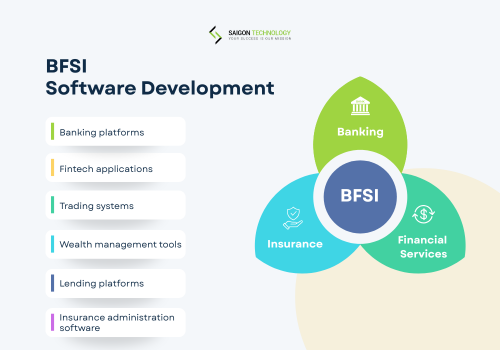


Banks and credit unions face a dual challenge: maintaining legacy systems that still handle millions of daily transactions while building digital-first products that customers now expect. Our banking software development covers:
Compliance requirements include PCI-DSS, KYC/AML, and Open Banking regulations like PSD2.
We work with banks to build secure integrations between legacy infrastructure and modern cloud-native financial systems, without service disruption during migration.


Fintechs move fast, but regulatory requirements don't bend for speed. We help fintech startups and disruptors build:
All within compliance-ready architectures that satisfy PCI-DSS, regulatory sandbox requirements, and licensing obligations.
Our Personal Loans project demonstrates this approach: we onboarded 20 senior engineers within 3 months and built a full loan origination-to-servicing platform. That engagement is now in its third year.

Enterprise finance and capital markets require precision engineering. We build:
All demand high availability, real-time data processing, and airtight compliance with SOX, SEC reporting requirements, and MiFID II.
Our wealth management platform handles full-scale portfolio management, trading operations, and fund administration, a 2+ year engagement that proved enterprise-grade engineering at scale.

Insurance carriers, MGAs, brokers, and insurtech companies need systems that manage complex policy lifecycles:
Key compliance considerations include state filing requirements, NAIC standards, and HIPAA for health insurance products.
We build digital insurance platforms that replace manual workflows with automated underwriting, real-time claims processing, and predictive analytics for risk assessment, helping insurers and insurtech companies reduce operational costs while improving accuracy.
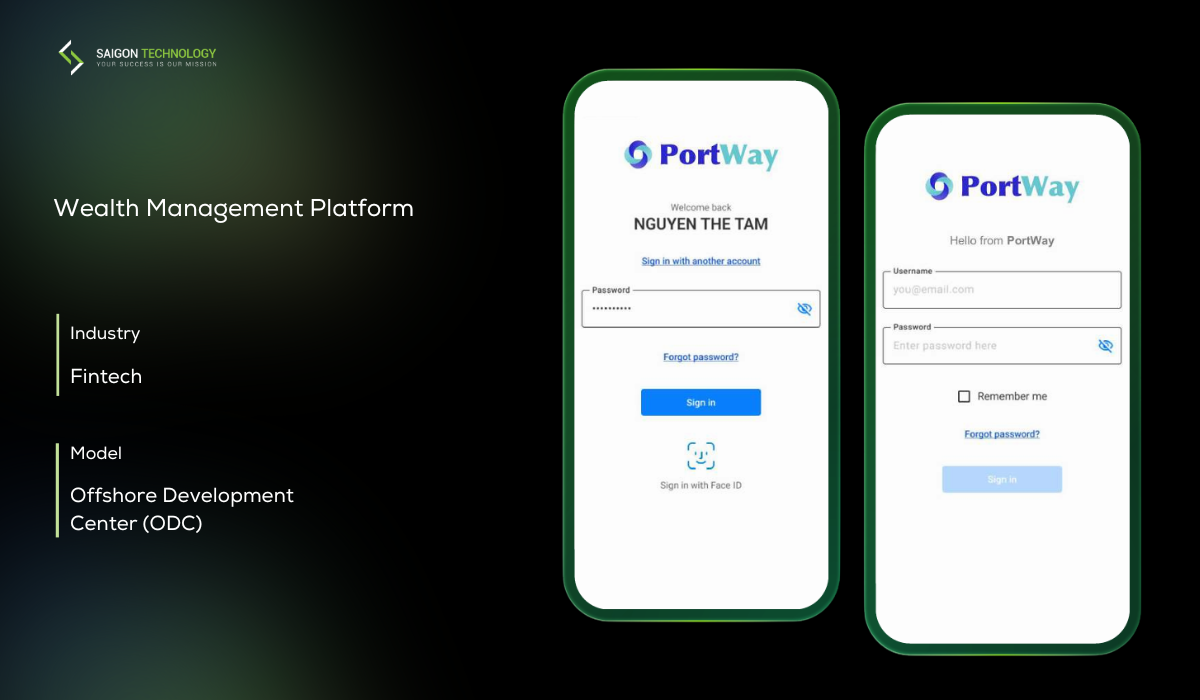
A client needed a full-scale wealth management platform built from the ground up. We designed and engineered:
The engagement ran 2+ years. The platform now serves active users in production with real-time portfolio tracking, predictive analytics for portfolio performance, and automated reporting.
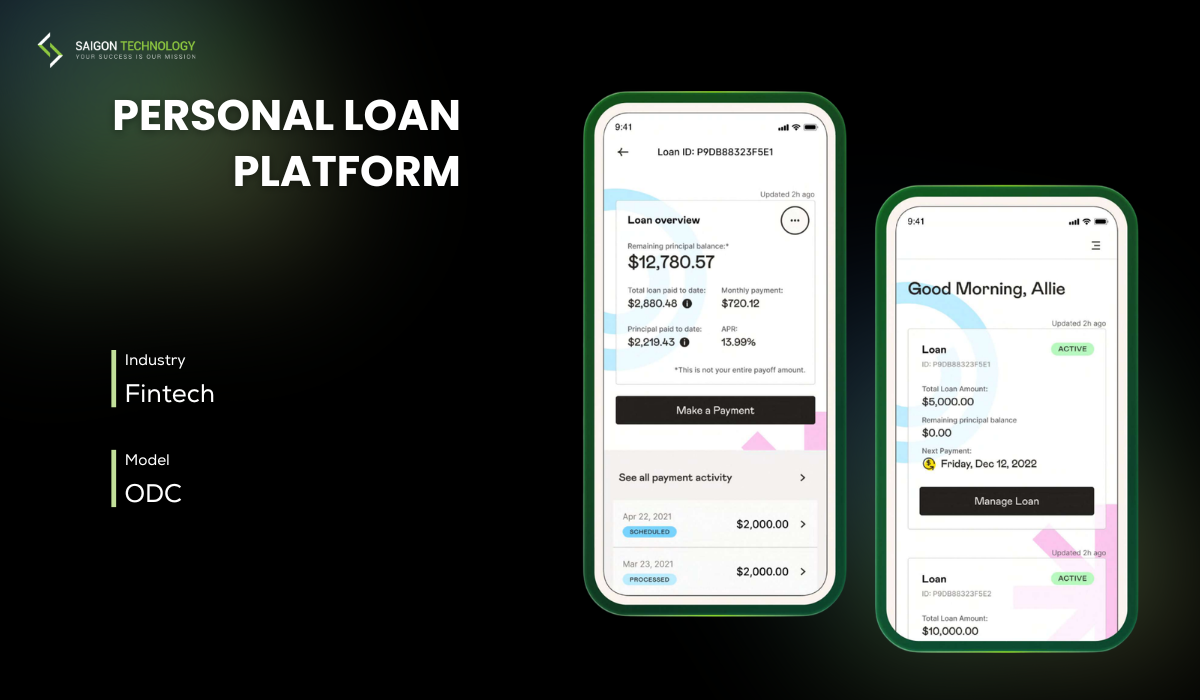
A fintech company needed to scale their engineering team rapidly to build a complete loan lifecycle platform.
Meeting the strict IT requirements of a European financial software company required both technical precision and compliance awareness. As feedback, it was noted that the engagement delivered high-quality financial software under strict IT requirements, exactly what a European financial services organization demands.

Most software development failures in financial services don't stem from technology choices. They stem from a development partner who treats a banking application like an e-commerce site. BFSI IT services demand domain expertise that generalist firms simply don't carry.
In our experience building BFSI projects, the most common failure point isn't technology, it's a development partner who underestimates these non-negotiable requirements. Compliance testing, secure data handling, and audit readiness must be designed in from day one.
Here are the four cross-vertical challenges that require specialized capabilities:
 Regulatory Complexity
Financial regulations vary by country, state, and vertical. A lending platform in the US faces different compliance requirements than a payment processor in the EU.
Non-compliance penalties are severe, GDPR fines in financial services have reached hundreds of millions of euros. A generalist development team often doesn't know what they don't know about compliance requirements. That gap shows up late in the project, when it's expensive to fix.
Security Requirements
Financial services organizations are the most targeted sector for cyberattacks. According to IBM's Cost of a Data Breach Report 2025, the financial industry consistently ranks among the highest average breach costs. These capabilities aren't optional features, they're regulatory mandates:
Security must be designed into the system architecture, not bolted on after development. That means penetration testing, audit logging, and governance controls at every phase of the build.
Legacy System Integration
Most banks and financial services organizations run core systems that are 20 to 30 years old. COBOL-based mainframes, legacy middleware, and proprietary APIs still process the majority of daily transactions. New solutions must integrate with these systems reliably, which requires engineers who understand both modern cloud environments and legacy stacks. This is where many custom software development for banking and insurance projects stall, the integration layer becomes the bottleneck.
Uptime and Performance
Financial systems cannot go down during market hours. Payment systems must process transactions with sub-second latency at scale. Lending platforms can't afford slow product launch cycles. Disaster recovery, failover planning, and performance validation are mandatory from the start, not afterthoughts added before go-live.









As the Owner and Director of ISMS Global, Australia, I understand perfectly how challenging it is to find a support team of skilled and professional developers to help grow a system. A few years ago, I found Saigon Technology Software (STS), led by Mr. Thanh Pham (CEO), and I have never looked back. STS has single-handedly taken ISMS camp management software from a concept on a napkin to an international product used by major companies around the world. If you are looking for a trusted partner to help you, then you should be talking to Thanh Pham.

I had the opportunity to work with Thanh (Bruce) Pham and his team. What a nice experience, though! It could be said that I was impressed by his professionalism and his team's enthusiasm. They always asked me to check the right demand and to make sure whether each work point was the best option or not. It was my honor to work with such a great team of software development. Hope to meet them soon in the upcoming time!

I have worked with Thanh (Bruce) Pham on several projects, and I admire his professionalism and his dedication to delivering high-quality work. He is responsive when answering emails and calls, as well as making sure that work always gets done on time. I am glad to be working with him and hope to continue working with him.

No doubt that Saigon Technology is one of the most reliable software development partners of DMI Global. Highly recommend them!

Choosing a BFSI software development company is a risk decision, not just a vendor selection. Here's why financial services organizations, fintechs, and insurers trust Saigon Technology.
 ISO 27001 Certified Security
Audited by BSI (UK), not self-certified. Financial data is handled under enterprise-grade security controls with documented processes for access management, encryption, and incident response.
Cross-Vertical BFSI Experience
Banking, fintech, finance, and insurance projects delivered with shared learnings across verticals. A compliance pattern that works for lending platforms informs how we build claims management systems. That cross-pollination reduces risk and accelerates delivery.
Compliance-First Engineering
PCI-DSS, KYC/AML, SOX, HIPAA expertise built into our engineering process. Compliance testing experts review work at every sprint, not just before launch.
2-Week Risk-Free Trial
Test our BFSI developers before committing. Start with 2 - 3 engineers, evaluate the fit, then scale to a full dedicated team.
Stable Teams, Low Turnover
Named a Fortune 100 Best Companies to Work For in Southeast Asia (2025). Your development team stays consistent throughout multi-year BFSI engagements - which matters when engineers carry deep compliance and domain context.
$22 - $46/hour
Senior BFSI engineers at Vietnam rates, without compromising on compliance standards, security practices, or code quality.


















































We start by mapping business requirements to applicable regulations, identifying integration points with legacy systems, and defining the security architecture. This phase determines which compliance standards (PCI-DSS, HIPAA, SOX) apply and how they shape the system design.

System architecture, database design, API specifications, and integration planning with existing financial systems. Compliance-by-design means regulatory controls are embedded in the architecture, not added as an afterthought.

Two-week sprints with daily standups and transparent progress tracking. Each sprint includes compliance validation relevant to the delivered functionality. We learned this approach the hard way: our Personal Loans fintech project required PCI-DSS validation at each release. Catching compliance issues in sprint two saved weeks of rework compared to a big-bang audit approach.

Penetration testing, code-level security audits, compliance validation against applicable standards, and OWASP vulnerability assessments. This phase also covers performance validation for high transaction volumes.

Zero-downtime deployment strategies, data migration from legacy systems with rollback planning, and DevOps support for ongoing operations. For banks and insurers running 24/7 operations, we plan every deployment window around business continuity requirements.

Regulatory monitoring for compliance updates, security patching, performance optimization, and iterative development for new features. Financial regulations change frequently, your technology solutions must keep pace.


BFSI software development is the specialized design, engineering, and deployment of technology solutions for the Banking, Financial Services, and Insurance industries. It covers core banking platforms, fintech applications, trading systems, wealth management tools, lending platforms, and insurance administration software, all built around strict compliance, security, and uptime requirements.
Compliance requirements vary by vertical and geography:
Based on our experience:
Timeline depends on compliance requirements, legacy system integration complexity, and the scope of regulatory approvals needed.
We follow ISO 27001 processes with:
All developers sign NDAs, and we maintain documented secure data handling procedures including audit logging and monitoring throughout the development lifecycle.
Yes. We have experience building integration layers for COBOL-based mainframes, legacy middleware, and proprietary banking APIs. Our approach uses secure integration frameworks and API gateway patterns that connect modern cloud-native applications with existing infrastructure, without disrupting ongoing operations.
Our rates range from $22 - $46/hour depending on seniority and specialization. A dedicated team of 5 engineers costs approximately $10,000 - $25,000 per month. Final costs depend on team size, compliance requirements, integration complexity, and project duration. We provide detailed estimates after an initial scoping call.
Yes. Our BFSI engineers are trained in PCI-DSS, KYC/AML, SOX, and HIPAA requirements. We run compliance checkpoints at every sprint rather than relying on a final audit, and our QA process includes compliance validation alongside functional and security testing.
The process starts with a free consultation to understand your requirements. From there:
Book a free 30-minute call




 May 08, 2026